
One Heck of a Year: My Cancer Story (and the Lessons That Came With It)
- David Warshaw

- Aug 12
- 39 min read
A letter to my clients, colleagues, and friends
First, the most important thing: I'm okay. I'm cancer-free and on the road to recovery, with lots of physical therapy. And boy, did I dodge a bullet.
I want to share my story with you. Friends, clients, colleagues, whoever's willing to read it. I'm sharing it because this past year was one of the most significant of my life, and I learned some things along the way that I want the people I care about to know. I'm also writing it down so I never forget the details.
So grab a cup of Joe and let's get to it.
Contents
Chapter One — It Started With a Kidney Stone
Chapter Two — The Warning Signs I’d Been Missing for Years
Chapter Three — Finding the Right Team
Chapter Four — The Surgery — Sunday I Had Cancer, Monday I Didn’t
Chapter Five — Nineteen Days in the Hospital
Chapter Six — Learning to Walk Again
Chapter Seven — The Human Landscape
Chapter Eight — Setbacks — The Dislocation
Chapter Nine — The Long Road Back Chapter Ten — Modern Times
Chapter Eleven — Miracles? I think so…
Chapter Twelve — What I Want You to Take Away — The Money Stuff
Chapter Thirteen — What I Want You to Take Away — The Human Stuff
Chapter 1: It Started with a Kidney Stone
In late August 2025, I felt that familiar pain in my side. I knew exactly what it was.
I'd had terrible kidney stone experiences in 2007 and 2018. Both required surgery to remove, and neither was pleasant. We're talking intense pain. Hospital visits. Pain cocktails. Extraction surgery.
I turned to my wife Diana and said, "Get ready for a wild ride."
I braced myself for misery. Fortunately, this particular stone was a non-event and passed on its own.
What wasn't a non-event was what the CT scan picked up while it was looking for the stone.
My urologist called and said the scan had found something in my bone. He wanted me to get an MRI. In the days in between, I was nervous, but I figured it was probably a nothing-burger. I tried not to let it consume me. Fortunately, I only had to wait a couple of days.
I did the MRI. And on a Friday morning at 6:30 AM, I got the results, ran downstairs, and uploaded them to ChatGPT. Something I'd never imagined doing, because, well, AI is new, haaa.
Within moments, the words came back: bone cancer.
My heart dropped. Diana and I were terrified.
Chapter 2: The Warning Signs I'd Been Missing for Years
Here's where the story gets wild.
Back in 2023, while we were living in Florida, a routine blood test showed an elevated alkaline phosphatase level. When I moved back to New York, my new primary care physician saw the same elevated reading and told me we'd keep an eye on it.
I didn't press the issue. I figured if it were truly serious, my doctor would tell me.
Over the next two years, the number kept climbing.
Then, in the summer of 2025, I applied to increase my long-term disability insurance. With Diana and Sophia depending on me, I wanted more coverage in case I ever couldn't work.
The insurance company postponed the application. Specifically because of the elevated alkaline phosphatase. The underwriter wanted to know what was causing it, and frankly, I had no idea.
That was the wake-up call I should have given myself years earlier.
So I went back to my primary care doctor, who referred me to my gastroenterologist, who in turn referred me to a rheumatologist. The rheumatologist told me I was fine and to check back in nine months. He even wrote a letter to the insurance company, at my request, saying I was fine.
To his credit, the gastroenterologist wasn't satisfied. He was concerned about the alk-phos and ordered a HIDA scan, which looks at how well the gallbladder, liver, and bile ducts are working. We found out I had a dysfunctional gallbladder, and I assumed that was the culprit.
It wasn't.
It took a kidney stone, and the imaging that came with it, to find the real answer.
And here's the deepest irony. When I eventually asked ChatGPT what could cause elevated alkaline phosphatase, one of the very first answers was bone or liver problems. I just wish my doctors had taken it more seriously.
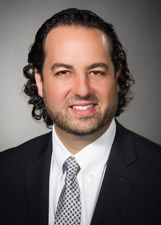
We were referred to Dr. Howard Goodman at Northwell Health — an orthopedic surgeon with a great ponytail that I could never pull off because I’m just not that cool. He confirmed what the imaging suggested: there was an aggressive tumor in the right iliac wing of my pelvis.
And then Dr. Goodman dropped the hammer on me…he informed me that this tumor had been growing inside me since 2007.
Let that sink in.
Two different hospitals — North Shore University Hospital and NYU Langone — had imaging from 2007 and 2018 that showed a tumor was there.
AND NO ONE EVER TOLD ME!!!
In 2007, the tumor was very small. By 2018, it had grown to 2 cm. And now, it was a whopping 10 cm. I had a poison growing inside of my body for 18 years, and I was totally clueless about it.
Chapter 3: Finding the Right Team
So, yeah, this tumor had to come out stat!
Dr. Goodman ordered a PET/CT scan and a biopsy, and told me to avoid any strenuous physical activity. The PET scan came first, before the biopsy. When it came back clear, and the cancer hadn't spread, Diana and I let out a huge sigh of relief.
We counted our blessings. We know the reality so many people face: learning their cancer has spread to the point of being incurable, their time suddenly limited. You're living the good life only to wake up one day and realize you're in a Titanic-sized nightmare. That was not our news, and we did not take that for granted. I still think back to how lucky I had it. Still gives me shivers.
Then came the biopsy. The results took nearly three weeks. Every day felt like an eternity.
During that wait, I drove upstate for a friend's birthday and ended up telling him the whole story in his car. I didn't have much information yet. It was just a very scary time. I remember his eyes welling up as I talked, and how deeply that touched me. His wife shed tears too. Neither of them could quite believe what was happening.
Those moments left a mark on me. How much people care.
When Dr. Goodman finally called me in, the rest of the news was cautiously encouraging. The tumor appeared to be low-grade and slow-growing. It was not a death sentence.
Even after surgery, recovery could mean a lifetime of using a cane, crutches, or in the worst case, a wheelchair. Normally that kind of news would have wrecked me. But honestly, folks, I was relieved. And happy. Because it meant I wasn't going to die.
Because, as you could imagine, my mind went to some dark places.
Phew.
It was going to be a serious surgery and a very long recovery. But I was going to be okay.
Then came the second opinion.

Dr. Goodman referred me to Dr. Jonathan Forsberg, an orthopedic surgeon at Memorial Sloan Kettering (MSK).
I asked Dr. Goodman how many of these surgeries he'd done in his career. His answer: five to ten. I appreciated his honesty.
When I asked Dr. Forsberg the same question, he told me he'd done four of them the previous month alone.
Diana and I looked at each other and knew we found our guy.
Dr. Forsberg explained the plan. A hemipelvectomy. In plain English, they'd remove the cancerous part of my pelvis, the right iliac wing and hip socket, and replace it with a custom titanium implant. The replacement would be 3D-printed and fitted to my exact anatomy using a series of MRI scans.
Because the 3D printing is a slow and exacting process, the surgery date kept moving. Originally mid-October, then November, then December 1st.
That waiting period was its own kind of stress. You've got a dangerous tumor inside you that you want out yesterday. But you gotta wait, because you need your surgeon to get the implant exactly right.
Like Dr. Goodman, Dr. Forsberg stressed no physical activity. No dancing, no sports, nothing. If the pelvis shattered, the cancer could spread which could be fatal.
For someone who loves to dance at every wedding, every bar mitzvah, every family celebration, this was a tough pill to swallow.

During this period, I also met Dr. Robert Maki, who became my primary oncologist at MSK.
Our first meeting fell on Sukkot, a Jewish holiday of joy, which made what he had to tell me difficult to hear.
He explained we were dealing with a rare bone sarcoma, a cancerous tumor of the bone. And not just any bone sarcoma. A chemotherapy-resistant one.
And get this. It was so rare that there are fewer than 100 documented cases worldwide. Can you believe that?
Talk about winning the wrong jackpot.
Diana started crying. I was just plain frightened. I asked Dr. Maki what would happen if the cancer ever came back. He explained I'd have three options: surgery, radiation, or special medication.
On one hand, the tumor had been growing slowly since 2007 and hadn't spread. On the other, its rare and aggressive nature meant it had to come out fast. And now we understood why the biopsy took forever to come back.
All in all - it had been an emotional rollercoaster. Crashing down with the initial diagnosis. Soaring back up when the PET scan came back clear, and now plummeting again with the news of this rare chemo-resistant tumor.
Here's the part that still gets me. The technology to even identify this unique type of tumor was only developed in 2019. The 3D printing to replace the affected bone only became available around 2022.
I was living at the precise intersection of a medical miracle and perfect timing.
Chapter 4: The Surgery — Sunday I Had Cancer, Monday I Didn’t
For years I'd had no noticeable pain from this tumor. That's exactly why I didn't know about it. But as the surgery date got closer, the pain showed up. With a vengeance.
I remember going to a party not long after meeting Dr. Goodman and, call it disbelief, call it stupidity, dancing for the crowd. Boy, did I pay for it minutes later. Granted, I didn't yet understand that a shattered pelvis could actually kill me.
By the weekend before surgery, I could barely pick up Sophia. The pain in my hip would kill just from holding her.
So yeah, I was ready for that tumor to come out.
Right before surgery, I was terrified. My biggest fear wasn't the operation itself. It was not waking up. Or waking up and not being all there mentally.
So I recorded a series of videos. For family. For friends. For clients. Just in case I never got the chance to speak to them again.
This is the one I recorded for my clients. I wanted to include it here as part of my journey.
P.S. As you watch, you'll probably notice just how frightened I sound.
On Sunday, December 1st, Diana and I checked into a hotel near the hospital. My childhood friend Eli came to visit that night and lifted our spirits.
Funny thing. One of my earliest memories of Eli was getting into a playground fight in elementary school. I wasn't exactly a fan of his back then. Years later, he was sitting with us the night before a life-altering surgery.
Lesson: You never know who'll end up mattering most.
The next morning, I was at the hospital by 7:25 a.m. At 8:30, they gave me the epidural, and I was out. I never got the experience of being wheeled into the operating room, of saying hello to the surgical team, of that moment where you know you're about to go under. I just woke up around 6:30 that evening.
My first thought: Hooray. My brain is working. I can think. I'm okay.
I'm... me.
The surgery had taken eight to nine hours. Dr. Forsberg removed the tumor-ridden pelvis and hip socket and replaced both with the custom 3D-printed titanium implant.
He told us it was an extraordinary success.
But the day had been rough for everyone who loved me. I'd lost a significant amount of blood during the procedure and needed multiple transfusions. Diana created a WhatsApp prayer group, so everyone was praying through every hour of the surgery.
After surgery, they took me to the Post-Anesthesia Care Unit, the PACU. It's the recovery room where they monitor you as you wake up from anesthesia and make sure you're stable. Seeing Diana when I came to was pure joy.
But the relief was complicated. My blood readings still weren't good, and I needed more transfusions. The team placed a central venous catheter, a line into a major vein in the neck, so they could deliver blood much faster than a standard IV allows.
Here's the irony of that day. It was the hardest day imaginable for everyone who loved me. They were stressed sick. Awake and waiting and worrying for hours.
Meanwhile, yours truly slept through the whole thing and woke up high as a kite. And HAPPY.
Chapter 5: Nineteen Days in the Hospital
What followed was nineteen days in the hospital. I've described it to people as going to hell and back. And this was at one of the best hospitals in the country, mind you.
The first phase was the most medically intense. But also the most controlled. I had an epidural managing the pain, a catheter, an IV pole, a JP drain pulling fluid from the surgical site, and a wound vac working alongside it.
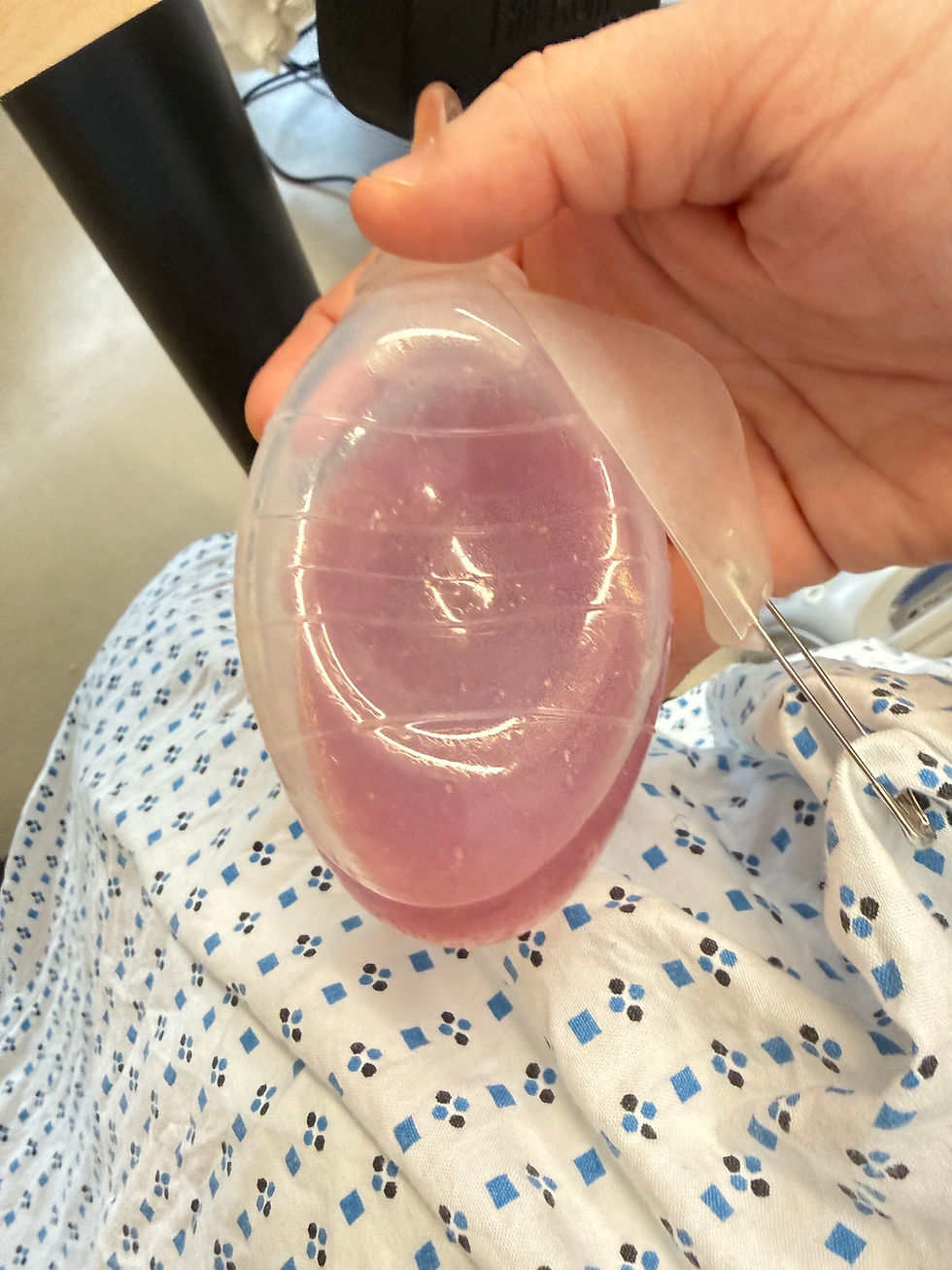
The JP drain deserves its own mention. As my body healed, it was producing enormous amounts of fluid. Sometimes 300 to 500 milliliters a day. The goal was to get that down to 30 to 50 before I could be discharged.
Well, it never got there.
Eventually the doctors made a practical decision. Getting me moving mattered more than waiting to hit an exact number.
All of this equipment turned even the simple things into an ordeal. Moving around, going to the restroom, all of it. The nurses had to keep making sure I didn't get tangled in the lines. And I was a fall risk.
My hospital uniform was simple. The gowns, the sticky socks so I wouldn't slip, and some extra-large hoodies I'd ordered on Amazon. I actually didn't mind the socks.
Then there was the nighttime gear. My feet were velcroed to a blue foam pillow to keep my legs from crossing in the middle of the night. I could pull them out if I really struggled, but I didn't like being strapped in. There was also a boot to keep my right foot straight. The neuropathy made it agonizing, so I barely wore it.
The whole nighttime setup was miserable.
Because of the hemipelvectomy, I couldn't sit on anything low. Toilets, chairs, beds, all of it had to be raised up. When I sat, it was in a special chair called a hip chair.
But the catheter did have an unexpected upside. You could be mid-conversation with a visitor and quietly take care of business, and no one was the wiser.
Kinda funny.

I was on a pharmaceutical cocktail that would make your head spin. Tylenol, Dilaudid, Oxycodone, Gabapentin, Tizanidine, Senna, Colace, antibiotics, blood thinners, and more. The pain management team was constantly adjusting the mix to keep things under control. And to their credit, they did. God bless them.
From day one, Dr. Forsberg made it clear that the two biggest risks were infection and blood clots. Every protocol, the medications, the blood thinners, the drain management, was built around preventing those two outcomes.
One of the most frustrating parts of the early days was that I couldn't focus. I'd actually been looking forward to some "me time." But because of something called Postoperative Cognitive Dysfunction, POCD, my brain just wouldn't cooperate for the first several days.
No movies. No TV. No books. No podcasts.
And worst of all, I couldn't really work. Which is something that brings me a lot of joy.
Fortunately, I could still respond to texts and emails. And I could still enjoy music. I vividly remember one sleepless night when music was the only thing keeping me afloat.
Now let's turn our attention to the pain.
It came from four distinct sources.

First, the wound site itself. Well managed by the team, but never entirely absent. My body was so sensitive that I couldn't be reclined flat. If they laid the bed down past a certain angle, I had to stop them. The pain hit instantly.
Imagine not being able to lie flat on your back. Always at an angle. Over time I could recline more, but in the beginning it was impossible.
One day I coughed, and it sent a shiver of pain through my new metallic body. After that, I held back every cough and every sneeze out of fear.
Second, neuropathy in my right foot. At first I couldn't feel my foot at all. It was a weird mix of pins and needles, numbness, and discomfort. My team told me it could last up to twelve months. Bummer.
Third, the hospital bed itself. I'm not a back sleeper, and I couldn't sleep on my side or my stomach. The bed created relentless muscle spasms. Night after night. And don't get me started on all the chronic hospital noise. These beds are wired with alarms, so every time I shifted my weight or tried to get out, it would go off. My roommates were no different, and some kept tripping the alarm. Then there were the IV machines, beeping at all hours with any disruption in the flow. Constant noise, constant.
And finally, the IVs. One or two isn't terrible. Five or six is a different story. My veins were hard to find. Sometimes they got it after two or three tries. Other times they had to bring in an ultrasound machine just to locate one.
Beyond the pain, sleep was essentially nonexistent. My pattern for nearly the entire stay was ninety minutes of sleep, two hours awake, another ninety minutes, another two hours. I passed the nighttime hours watching movies, listening to music, working, whatever I could. It didn't help that Dr. Forsberg's orthopedic team did their rounds between 6 and 7 a.m. If I'd finally managed to fall asleep, they'd wake me, and honestly I didn't mind, because I always had a running list of questions for them. Some mornings I'd force myself to stay up just so I wouldn't miss them.
And then there was the exhaustion. Sleep deprivation plus the medications meant I was constantly fighting to stay awake. People would come visit and I'd fall asleep on them mid-conversation.
The fatigue was bone-deep. The kind you can't will yourself out of. And it followed me home.
The medications caused constipation. I was happy when I went, as it meant my body was waking up, but I tell ya, going in a bedpan sucks.
One Patient Care Technician (PCT), a staff member who assists the nurses, pushed me hard to make the effort to get to the bathroom. I vividly remember my leg shaking uncontrollably the first time I tried.
But she was right. Once I managed it, I felt like a completely different person.
I also couldn't shower, which was rough because I love a good shower. Personal hygiene in a hospital is its own kind of awful. And I hated those gowns. You just feel gross all the time.
My appetite was gone too. Food is one of my real joys in life, and that pleasure just vanished.
You don't feel like a human being.
And then there was the waiting game. During the day I had Diana and visitors to help me. At night, when Diana went home to rest and take care of Sophia, it was just me. And nighttime hospital staffing is greatly reduced.
So you wait for a nurse. Wait to see a PA. Wait for medication. If you need a new toothbrush, time to wait.
All this when you're in pain and alone. Waiting for someone to help with something you can't do yourself. That's its own kind of frustration.
But you adapt. It takes a while, and it's hard. But you do.
You also have no choice, haaa.
But I'll tell ya. The ability for people to adapt to difficult situations is a real blessing. A special kind of grace.
Chapter 6: Learning to Walk Again

Physical therapy began the day after surgery. The big accomplishment was scooting to the edge of the bed and sitting up.
Not standing. Not walking. Just...sitting up.
It was excruciating. I remember thinking: I don't know if I'm ever going to walk again.
But as time passed, things slowly improved. And I got stronger.
The physical and occupational therapists at MSK were exceptional. They pushed me, celebrated small victories, and kept raising the bar. Some days I'd get an hour of PT and an hour of OT. Sometimes just one or the other. Either way, I was working with a team of pros who clearly loved what they did. They also stressed that I do my exercises on my own, not just with them.
I started off using a walker. As time went on, I'd do a lap or two around the fourth-floor hospital wing. Slowly, painfully, but walking.
By discharge, I'd even climbed stairs.
One of the OTs was actually an old friend from my Upper West Side days. We weren't close, but we'd bumped into each other at parties over the years. And now here she was, my occupational therapist. I remember when she first told me she was an OT at MSK, I didn't even know what MSK was.
Like with Eli, you never know when someone from your past will reappear, or in what role.
There's another funny story from those walks. One night I asked the head nurse, Alpha, if I could go for a walk. (Yes, his name was Alpha, and that's awesome).
He looked at me like I'd completely lost my mind. "No, you cannot go for a walk," he said.
I was baffled. Until I realized he thought I meant outside, in the freezing cold snow. I just meant around the floor.
We had a good laugh about that. Super nice guy.
The therapists and I all agreed that my next stop would be an Acute Rehabilitation Unit, an ARU. A facility that provides at least three hours of PT and OT per day, five to seven days a week.
Chapter 7: The Human Landscape
The staff at MSK was simply incredible. The nurses and doctors worked unbelievably hard, around the clock, caring for very sick people. God bless them. I'd get tired just watching them work.
There were a few I didn't click with, which is to be expected with that many people. But only one was notably unkind. Fortunately, Diana advocated for me, and I didn't have to work with her after that.
When you're at your most vulnerable, the bedside manner of the people caring for you matters enormously.
One PCT opened up to me about something deeply painful happening in his personal life. I won't share the details out of respect for his privacy. But I'll say this: in a hospital, you quickly realize that the people caring for you are carrying their own burdens too.
Compassion is not a one-way street.
I really bonded with a lot of the nurses and PCTs. Talking about movies, nursing work, life. It's funny. When you're down and not at your best, you reach back for your strengths. So whenever an opportunity came up, I'd help the staff with money questions. It made me feel like a productive human being again.
Devon, a nurse and former NYPD officer, took such good care of me. Super professional. We clicked right away, and I always requested him. Another great nurse was from France. She took care of me three nights in a row and always took me on walks.
I was on the fourth floor at MSK, the ward for orthopedic and brain cancers. They typically roomed me with brain cancer patients. Most of my roommates were non-verbal or only slightly verbal. They were not in a good place and definitely weren't looking to make a friend. When you see that kind of suffering, it's hard to feel bad for yourself.
One night I heard a woman down the hall screaming, clearly in great distress, while her poor roommate paced the corridor waiting for things to settle down.
With that said, my second-round roommate, George, was a character. A photographer who specialized in shooting heavy metal bands, with a big personality and a great sense of humor. We took turns moaning in pain, begging for help from the hospital staff. He even gave me an ETF recommendation.
When my visitors heard a voice from behind the curtain chiming in on our conversations, they'd look at me, confused. "That's my friend George," I'd say. We'd all have a laugh.
Now get ready for this one.
One night I was talking with a doctor friend of mine, and he told me I should reconnect with an old high school buddy. I'll call him Marc for privacy. I asked why. He said Marc had gone through something similar. I told him to have Marc call me right away.
Marc called. And I learned he'd had the exact same thing three years earlier. In fact, the hell he went through sounded even worse than mine.
Remember, bone cancers are rare. Less than 1% of all cancer cases. And I'd just learned that a childhood friend, someone I rode the bus with from elementary school through high school, born the same year, raised in the same town, had the same plague descend on him.
Now I ask you. What are the odds of that?
Marc became a source of advice and encouragement. I finally had someone who could not only sympathize, but empathize. That's three times in this story alone that someone from my past showed up exactly when I needed them.
One more story. Once I was home, I bumped into a childhood friend I'd lost touch with who lives in my town. She turned to her young son and asked him who he prays for every night. He said, "David Warshaw."
She pointed at me. "Honey, that's David Warshaw."
He'd just met the person he'd been praying for.
I was soooooo touched.
Which brings me to the people I need to thank.
First and foremost, my wife Diana. You were my rock throughout the whole ordeal, and still are. I could not have done this without you. Your WhatsApp prayer group filled me with strength when I needed it most. Driving every morning to the city, leaving late at night to head home, taking care of Sophia, worrying about me, managing the household, dealing with a tree branch totaling our car mid-stay, walking in the freezing cold every night to either a nearby hotel room or the car, administering my PICC line, holding my hand, advocating for me. The list goes on and on and on. And on.
My immediate family too. Nana Soraya, Uncle Jam, and Aunt Bita were there every single day, helping us with Sophia. School drop-offs, pickups, all of it. Trying to make our lives more normal. When you can't be the parent you want to be, having people step in like that is everything.
To everyone who visited, by phone, by text, in person, I'm grateful beyond words. I can't reiterate enough how uplifting it is to see and hear from the people in your life. Check out the full montage of the people who visited me at the end. Every one of those faces got me through this.
To everyone who kept me in their prayers, thank you from the bottom of my heart.
And the food. So many people sent it, brought it, dropped it off. So kind of you. Special shoutout to Mahnaz and Cyrus, who somehow managed to carry an enormous box of it up to my room. How did you do that?
Shoutout to my bestie Mira and her girlfriend Joyce, who cut my hair on a fast day when I was looking like a wild beast. Joyce nearly fainted afterward, probably from the fasting. But boy, did I feel fresh and clean. Thank you. And to Carmelo, my barber, who came to the house to cut my hair when getting around town was still a challenge. That meant a lot. Thank you.
To my caregivers, Vako, Nutsa, Nickeela, Miss Irene, and Jimmy. You showed up at all hours. You treated me with patience and kindness, and you turned some of the hardest nights of my life into something bearable. I will not forget any of you.
To my Spear Physical Therapy team: Raymond, Katie, Uzair, and my main man Aaron. You got me strong, and the work isn't done. Thank you.
Dr. Forsberg, you're a legend. You literally saved my life. What can I even say to that? And for you, no big deal. Just another day at the office. Incredible.
And to the entire medical team at MSK, there are simply too many extraordinary people to name. The doctors, the nurses, the PCTs, the physical therapists, the pain management team, the people who cleaned my room and brought my meals.
And to anyone I left out who helped me in this darker time. There are simply too many to count.
Thank you.
Chapter 8: Setbacks - The Dislocation
I was finally more mobile. Stronger. Making real progress. Dr. Forsberg's plan was to discharge me by December 14th, and from there, on to the ARU.
Just one problem. The insurance company denied it.
Their reasoning? The physical therapist's notes said I was walking long distances in the hospital. That alone was enough for them to determine inpatient rehab wasn't necessary.
At that point, I was done fighting. I just wanted to go home.
So I did.
And I was so happy leaving. It was a new dawn. I befriended the ambulette operators quickly and we started rocking out to music. These guys were really, really cool, and I had such a fun ride home.
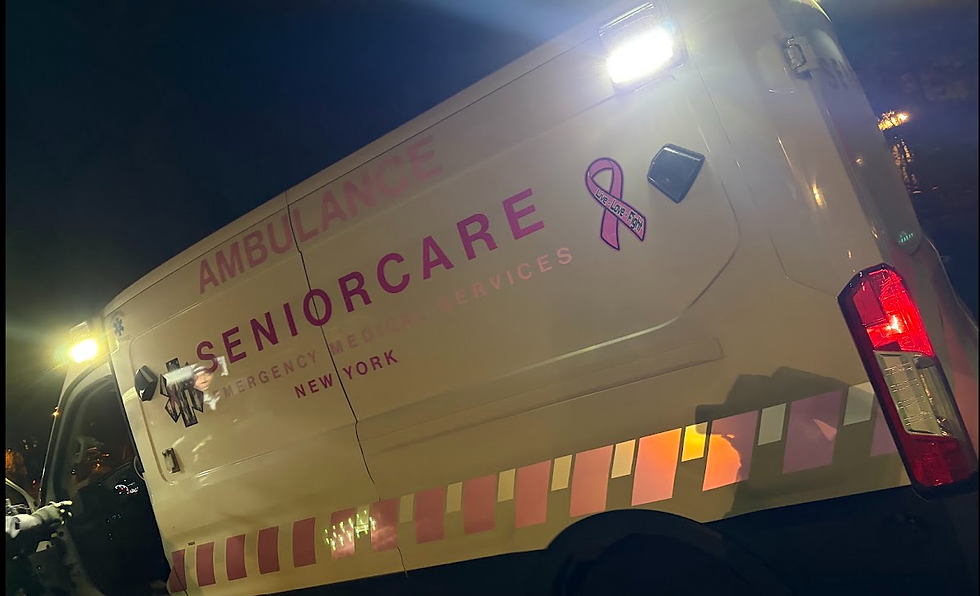
Being home was incredible. For all the reasons home is home.

The best part was seeing my then three-year-old daughter, Sophia. Also known as the Sophinator. She'd only been able to visit a handful of times, and being apart from her was incredibly hard. Being back with her made everything feel normal again. I was home.
And then…I found myself right back in the hospital.
It was only three days later, at 2:00 in the morning on December 23rd, when my hip socket dislocated.
I'd been moving around. Not recklessly, just normally. And I noticed my right foot seemed to be turning inward. It happened three times. I later learned that the hip socket was coming out of place, and the sensation in my foot was a symptom.
The pain was excruciating. I was afraid to be moved.
I called Hatzalah, the volunteer Jewish emergency medical service, and they were extraordinary. They lifted me on a sheet, transported me with incredible care, and took me directly back to MSK.
At MSK, they confirmed the dislocation and performed a second surgery that same day. The nurses who'd just said goodbye to me days earlier were surprised to see me back. "You missed us? You're back so soon?"
Three days later, on December 26th, Dr. Forsberg performed a third procedure. The goals: repair muscle tissue damaged during the dislocation, clean out a potential bacterial infection found during surgery number two, a procedure called a washout, and tighten the hip socket to prevent another dislocation.
The infection piece was frightening. I even got my own infectious disease doctor, Dr. Figueroa. He was great.
The orthopedic team told us plainly that if it wasn't managed, the consequences could be severe. Up to and including removal of the entire titanium implant. Or in a worst case, loss of the leg.
Shell-shocked...
Fortunately, the surgery was a success.
The suspected culprit was Cutibacterium acnes, a slow-growing bacterium known for attacking prosthetic hardware. Dr. Figueroa prescribed a 12-week course of antibiotics, initially delivered through the IV in the hospital and then for six weeks through a PICC line at home (more on this later).
We got somewhat lucky with the infection. It was caught before a biofilm could form, which makes it far easier to treat. As of this writing, the doctors believe there's an extremely small chance any infection remains.
Dr. Forsberg told me afterward that he'd tightened the socket considerably and didn't expect it to dislocate again.
The first surgery took eight to nine hours. This third one was around four. But it produced the most pain of the entire experience.
Whatever they had me on wasn't working. They had to add fentanyl and change up my other meds. It got the job done, but then constipation set in, which was horrible for about a day.
I remember thinking I'd forgotten how bad the pain could get. And then it got worse than I remembered.
Your body does you a favor after something like this. It lets the memory of pain go fuzzy. You know it hurt, but you can't feel it anymore when you think back on it.
Then you're in it again, and the whole thing comes rushing back at full strength. I remember lying there thinking, how did I forget this?
Chapter 9: The Long Road Back

I was officially released from MSK on January 8th, and boy, was that a happy day. Just like my first discharge.
Home, finally.
But home looked different than I'd imagined. I was sleeping in a hospital bed set up in my home office. Stairs were still hard. I didn't want to wake Diana up every two hours. And I needed a night nurse to help me.

We'd also bought an MCombo powered recliner for the living room, since I still couldn't sit on regular chairs. That recliner has been a real lifesaver. And I'm still using it! We set up an elevated commode next to the bed too, because I moved so slowly that a normal trip to the bathroom wasn't realistic. It really came in handy.
I woke up three or four times a night, just as I had at MSK, because of the neuropathy in my right foot. Irene, my caregiver, would give me a famous foot rub during those wakeful hours. I'd sit up for ten or fifteen minutes, then try to sleep again.
It was, in many ways, a continuation of the hospital experience in a more familiar setting.
Diana was giving me two antibiotic injections every day through the PICC line, a catheter inserted into my arm that delivers medication directly into the bloodstream. The PICC line portion ran for a month at home.
She has no medical training. She learned because I needed her to.
And there was real weight on her. A PICC line runs straight to a major vein near the heart. One slip on the sterile procedure and she could give me the very infection we were fighting. She knew that.
She was extraordinary. Fifteen minutes every evening, without complaint, on top of everything else she was managing. Sophia. The house. Me. Her own wellbeing.

Enter the brace from hell.
Before the third surgery, Dr. Forsberg told me I'd need to wear a special brace. He gave me a heads up that I was going to hate him for this one, because it was going to be super uncomfortable, and I'd be in it for six weeks.
He wasn't kidding.
It was a custom-fitted device, intricate and cumbersome, designed to keep me from moving in any way that could pop the joint out again. Taking it on and off required lying down. Every bathroom trip was a production. Thank heavens for urinal jugs.
It dug into my hip and back every single night. When we watched a movie, I was rarely comfortable and couldn't wait to get into bed.
So yeah. I was counting down the days until that thing could come off.
My mobility at home was extremely limited. Every movement had to be deliberate. My physical therapist had specific recommendations for how to turn, sit, and stand.
I lived in a state of hypervigilance. Am I doing this okay? Did I bend too far? Did I just violate one of my precautions? Those questions ran on a loop in my head, both in the hospital and back home.
The worry was real because I did not want to end up back in the hospital.
And I'd already learned the hard way how fast things can go wrong. I still don't know exactly what caused the dislocation in December, whether it was one wrong movement, a buildup of them, the infection, or a combination.
After the dislocation, you can imagine how careful I became.
The pain medications also made me very emotional. I rarely cry as an adult. I'm a bro. But on those meds, I'd just cry. The smallest things would bring me to tears. One night I watched The Long Walk at home. Tearjerker!
It's amazing how meds can alter your state of mind. And I'll tell you something else. I understand now how people get hooked on this stuff. When you're in serious pain and the Dilaudid hits, it knocks your lights out and floats you up to cloud nine. The relief is that complete. I'm grateful it never got its hooks in me, but I really get it now.
The exhaustion came home with me too. Sitting at my desk trying to work, I'd nod off for a few seconds before catching myself. The meds plus the still-fractured sleep made fighting it nearly impossible.
On January 26th I had one more scare. Chest pain in the middle of the night.
I called Hatzalah again. They took me to Northwell, where a family friend who's a cardiologist treated me like his own son. The conclusion: likely gastrointestinal or stress-induced, not cardiac. My vote: gastro-related, because I don't think I was stressed.
I breathed a sigh of relief because the pain was real and scary. I was discharged the next day. Just a one-day detour.
Before outpatient PT, I spent about three weeks with Young, a home health physical therapist. It was the right call, since I wasn't strong enough to travel yet.
But at-home PT isn't nearly as powerful as an actual outpatient location. The equipment, the space, the energy of a room built entirely for rehab, none of that comes through your front door.
A necessary first step. Not where the real progress happened.
Chapter 10: Modern Times

On February 4th, I began outpatient physical therapy at Spear Physical Therapy, inside the Equinox gym in Great Neck. My physical therapist, Aaron, is exceptional. We clicked immediately. I'd tried another practice first and it wasn't the right fit.
I started out going three times a week, Monday, Wednesday, Friday mornings, and the progress was remarkable. Starting in July, I dropped down to just Mondays and Fridays, but I'll probably resume three sessions a week after the summer.
Dr. Forsberg told me early on that outpatient PT was where the real healing would happen. And boy was he absolutely right. Movements that were impossible in the beginning are routine now. Strength I thought I'd lost forever is coming back. The work is ongoing, but the trajectory is clear, and I'm getting stronger month by month.
Here are some more key updates for ya: On February 5th, the PICC line came out.
On February 6th, I took off the brace for the last time.
Man that was a HUGE week. No more PICC line, and the brace from hell was officially retired.
On February 17th, I showered at home for the first time. I'd been going to Diana's aunt and uncle's house nearby to use their first-floor shower.
That first shower at their place was indescribable. When you haven't showered in weeks, just imagine what it's like when the water hits your face. Just imagine...
Once I felt strong enough to shower at home, that was incredible too, but for different reasons. Convenience. A feeling of progress. Independence. I still needed to time it around when someone could help, but it was mine again.
On February 25th, my weekend caregiver texted saying she could no longer work for us. The timing turned out to be perfect because the first weekend I left my office hospital bed and slept in my own bed upstairs. And get this. I slept through the night, mostly, which is a blessing. At some point I even started sleeping on my side.
Not being able to switch positions in the middle of the night had caused so much pain and misery. Now I can alternate, which gives my back a rest.
Now see, after this kind of cancer, the obvious fear is that it can come back. The first two years carry the highest likelihood. So I have to get CT and MRI scans every three to four months, since there are four lesions my team is monitoring.
On March 3rd, I had my first follow-up scan. My birthday is March 8th, so I got a pretty great present that year: everything came back normal. On April 12th, we surprised Sophia with the newest member of the Warshaw family, a maltipoo named Toffee.
She was turning four on April 16th, so we figured it would be a birthday to remember. Walking her is kind of like a bonus PT session, though even now I hurt afterward.On April 23rd, I got more good news from Dr. Forsberg. The X-rays looked good and most of my restrictions were lifted. Around that time, I went from a walker to crutches, which was great, as you have a lot more mobility and freedom on crutches.
It was also around this time that life just started feeling normal again. Going to restaurants. The movie theater. Using regular toilets and chairs. Just amazing. And Diana stopped schlepping that cushion for me to sit on any longer. Speaking of movies, the first movie I saw was Michael on April 26th, 2026, which was great. The movie before that? Weapons on August 27th, 2025. A whopping 242 days for a guy who loves seeing a flick at the cinema.
In June, I started going back to the office to meet with clients which was super fantastic.
On July 9th, I had my first full day without Tylenol. That may not seem like a big deal, but it was huge, because it meant my body was getting strong enough to function without meds. Remember, I was taking two pills three times a day.
As the summer marched on, I started using my crutches as a cane, and then a cane when upstairs. The next stop is a cane only, no crutches. And then just walking normally on my own two legs.
I still can't drive, which is a bummer, but it'll come soon. And I'll be honest, I get nervous when it rains or snows. Because if a crutch or the cane slips, I could go down. And a fall is the last thing my pelvis needs.
So I'm careful.
On July 30th, I met with Dr. Forsberg. He said the titanium implant has fused with the bone and looks great. He wants to see me again in three months and thinks I should be back to 100% by the end of the year.
I intend to get there. The weekend of August 7th, Diana and I got away to the Borgata in Atlantic City. We went to cheer on my friends Darius and Rebecca, who were running in a triathlon. It was our first real getaway since the surgery, and it felt so good to be out in the world again doing something normal.
And now I'm one of the happiest guys in Nassau County. I take it day by day, one PT session at a time, one scan at a time. I can't control what I can't control. All I can do is live life to the fullest, serve my family, serve my clients, and pray it never comes back.
Chapter 11: Miracles? I think so...

Here's where I pause, as a God-fearing man, and reflect.
Remember the kidney stone drama in 2007 and 2018? Well, I'm not gonna lie. I did the whole "woe is me" thing and started questioning why I was being punished. But now I look back and think maybe it was His way of trying to alert me. The hospitals did indeed miss it. But He kept sending the signal.
We never ask "why me?" when good things happen. We only ask it when things are hard.
And check this. For those eighteen years I lived a very active life. I danced, played sports, did martial arts, and somehow my pelvis never got injured to the point where the cancer could spread. Talk about having a guardian angel.
I get goosebumps just thinking about it.
And the technology itself was perfectly timed:
The 2019 DNA fingerprinting that identified my tumor type and saved me from chemo.
The 2022 3D printing that gave me a custom titanium pelvis and hip socket so I could walk again
The right surgeon, Dr. Forsberg, at the right hospital, MSK, in the right city.
Moving back to New York from Florida. The right doctors were here, and so were the people who carried us.
The life insurance policy that came through one month before my diagnosis hit my records.
I see God's hand in all of that. Maybe I just got lucky, but it all seems too perfect to be happenstance.
Because here's the other thing this year taught me: the human body is a miracle.

I love dancing, martial arts, and basketball. I don't think I'll ever do those things the way I did. I feel the metal when I move. I'm sure it'll get better, but I lost a piece of who I was. What I could do.
And I still get bummed out about it. I may never move normally again, let alone run. And even the things I can do, I hold back on, afraid of dislocating it again.
I never realized how much I'd miss my own pelvis. Sometimes when I'm out, I catch myself wondering what people think when they see me moving the way I do now. And I think, if only you knew what I could do before all this. Maybe that's what older folks feel when they watch young people round town. You should've seen this mug in its prime, before life happened.
But I'd make that trade every single time. I'm alive. I'm happy. I got a new lease on life.
So now I watch people bend down, run for exercise, get up off the floor without thinking about it. And I know exactly what a miracle that is.
They have no idea. A year ago, neither did I.
Chapter 12: What I Want You To Take Away - The Money Stuff
Heck of a story, right? Yeah, it's been a rollercoaster I tell ya.
This experience has definitely opened my eyes and changed my perspective. A lot of lessons came out of it, so I've split them into two chapters. The money stuff first, the human stuff next. Both matter.
Let's begin.
Don’t Procrastinate on Life & Disability Protection

This is the single most actionable lesson in this whole letter, and I want to say it as clearly as I know how. The disability insurance increase I applied for in summer 2025, the one that started all this? Declined, because of the elevated lab value. Window closed.
The life insurance I applied for one month before my diagnosis appeared in my medical records? Approved.
If I'd waited even a few weeks longer, I would have been uninsurable. Diana and Sophia have more protection today because I happened to stop procrastinating just in time.
Disability insurance, life insurance. These aren't abstract concepts. They're what keeps a health crisis from also becoming a financial one.
Client or not, if you've been putting off a coverage review, please don't. The best time to do insurance planning is when you're healthy.
Build a Real Emergency Fund

This is critical advice, because emergencies will happen in life.
With this incident, costs came at us from all over. Copays. Deductibles. Caregivers. Parking. Hotels. Medications.
We were able to absorb all of it without touching our long-term investments.
Target six to twelve months of living expenses in cash. And I know what you're thinking: cash doesn't earn much. But cash isn't a low-returning asset when it's the thing keeping your life from unraveling. It's peace of mind, and this year I found out exactly what that's worth.
Purchase Health Insurance (And Know What It Covers)

This is not a joke. Get health insurance. For realz.
Guess what my total hospital bill was for both stays combined?
No, seriously. Pause here and guess.
The answer? $752,230.03.
I now understand how a medical calamity can cause financial devastation. So protect yourself. Right now. I know health insurance is expensive, but you need it. Plain and simple.
And pay attention to the deductible. A cheap premium isn't a bargain if the deductible lands all at once, right when you're least able to deal with it. Price your plan around what you could actually write a check for if disaster hits.
And please, make sure you know what it covers.
I lost six extra hospital days because the insurance company denied my transfer to inpatient rehab, citing the physical therapist's notes that I was "walking long distances."
So read your policy. Understand your network. Know the appeals process. Find out what counts as "medically necessary" under your plan.
Pre-certifications, step therapy, prior authorizations. Boring words that decide what care you actually receive.
Get Your Estate Plan In Order

There were long stretches of real uncertainty. In those moments, I was deeply grateful Diana and I had our affairs in order.
Will. Healthcare proxy. Power of attorney. Beneficiary designations on every account, including the life insurance and our retirement accounts.
Sophia is four. Who would be her guardian?
These are not pleasant conversations. Have them anyway. And once you've had them, revisit these documents every few years, because life changes faster than paperwork does.
One bonus nobody tells you about: the exercise of getting your estate plan done forces you to organize your entire financial life. Every account, every beneficiary, every advisor, all in one place. That's invaluable if one spouse isn't the one managing the day-to-day finances. Explore Long-Term Care Insurance

Here's one I never expected to experience at 44.
I spend a lot of time recommending long-term care coverage to pre-retirees and retirees, and it's easy to wave off. Then there I was, needing round-the-clock care at home, paying $5,000 a month out of pocket.
For me, thankfully, it was short-term. But for a lot of elderly people, this isn't a phase. It's a new way of life, and that $5,000 doesn't stop. It becomes the rest of your life.
So protect yourself. If long-term care insurance isn't the right fit, that's okay, but have a plan. The care happens whether you've planned for it or not. The only question is whether it devastates you financially.
Hire Help. Worth Every Penny.

If you or a loved one ever faces a prolonged hospital stay, hire a nighttime caregiver if you can possibly afford it.
Vako was a financial decision as much as a medical one, and one of the best we made. Those thinly staffed overnight hours were when I needed help most. He eased my neuropathy with massages, got me what I needed, called for nurses when no one answered my buzzer, and kept me company when the nights got dark.
Worth every penny.
Props to cousin Shaney, who flew in from Florida to be with us. She's the one who nudged me to get nighttime help.
The same principle runs through the rest of your financial life. A good CFP®, a good CPA, a good estate attorney, a good insurance specialist. They don't cost. They pay. Especially in a crisis. And the more they connect the dots across your whole financial life, the more they're worth.
The most expensive thing you can do is try to figure it all out yourself when the pressure is highest and your bandwidth is lowest.
Spend Your Money on What Matters.

Take the family vacation. Go to the expensive restaurant. Say yes to the dress. Embark on experiences that create lifetime memory dividends.
I have a new and very personal appreciation for what a well-lived life actually looks like. And it's not the size of your IRA at 89. It's the memories you made and the people you made them with.
Now, as a financial planner, I always have to guard against the risk of outliving your assets. That's real, and it's my job. But if your plan shows you dying with three million dollars at 89, maybe it's time to spend a little more today, while you're healthy enough to enjoy it.
I'm 45 now. Vacationing is out of the question right now.
So I'll ask you this. Who wants to see Alaska from a wheelchair?
That's the lens I'll be bringing to our Winter Season retirement and cash flow meetings.
Chapter 13: What I Want You to Take Away- The Human Stuff
Alright — onto the human stuff. This is where we get real. Very real. Sorry in advance for being preachy.
Get Married or Find a Life Partner

This ain't no joke.
Having a partner who truly has your back, unconditionally, without keeping score, is one of the most important things a person can have. You already saw what Diana did for me throughout this story.
There are dozens of reasons to commit to another person. One of them is so you never have to face the hardest days of your life alone.
Thank you, Diana (again). I love you.
Be Your Own Advocate.

For realz. And start while you're strong and healthy, because that's when you have the bandwidth to do it right.
Here's the one that could have changed everything for me. Track your own lab values over time.
My alkaline phosphatase was elevated in 2023, and it kept climbing, year after year. Nobody was concerned except, eventually, an insurance underwriter, who flagged the very thing my doctors had been shrugging at for two years.
So watch the trend yourself. Your results are probably sitting in a patient portal right now. A single number a little out of range might be nothing. The same number climbing for two years is a story, and you may be the only one reading it. Get to the bottom of it!
Ask questions. Follow up. Request copies of your records. And if you have pain, or a value that keeps rising, become Sherlock Holmes and don't stop until you've closed the case. Don't assume your doctors are connecting the dots. Mine weren't.
Use every tool available to you. I'm a big proponent of AI, including ChatGPT, Claude, Perplexity, and Google Gemini. These aren't replacements for your doctors, but they're powerful thinking partners. Paste in a lab result and get it in plain English. Ask what a value climbing for two years might mean. Prep questions so you walk in ready instead of blanking in the room.
And when you're in the hospital, have someone who can advocate for you when you can't advocate for yourself.
It sounds cliché. But it's not.
Get a Second Opinion.

For anything serious, get a second opinion.
Dr. Goodman encouraged me to get one himself, and that recommendation changed everything. I can't thank him enough for it.
But here's the bigger lesson. Dr. Goodman was honest about his experience. That honesty is what sent me to a more suitable surgeon.
What if he hadn't been honest? I could have had life-altering surgery performed by someone far less experienced.
So don't rely on your doctor to suggest a second opinion. Insist on one yourself.
Get a Preventative Full-Body MRI Scan.

My tumor was growing inside me for 18 years before anyone noticed. By the time it was found, it had ballooned to 10 cm.
That's not a story I want any of you to live.
Elective full-body MRI scans, sometimes called "preventative" or "screening" MRIs, are built exactly for this. In about an hour, they image your major organs, brain, and spine, looking for early-stage tumors, aneurysms, and other silent conditions before symptoms appear. The leading providers in the US are Prenuvo, Ezra, and SimonMed Longevity. These typically aren't covered by health insurance and run roughly $1,000 to $2,500 out of pocket, though most providers accept HSA or FSA funds, which softens the blow.
Now, I understand the fear. A lot of people avoid the scan because they're afraid of what it might find. I get it. But flip it around. For most people, it comes back clean and you walk out with something priceless: peace of mind. For the unlucky few, catching something early can change everything. Either way, you win. The only way to lose is to not know.
That said, here's the honest tradeoff. Because MRIs are extremely sensitive, they often catch benign quirks and harmless cysts that send patients down stressful, costly follow-up rabbit holes. They can also miss very small issues, because a whole-body scan uses lower resolution than a targeted one. And mainstream medicine still doesn't recommend them for average-risk people.
But if I'd had one in 2018, that 2 cm tumor would likely have been a 2 cm conversation, not a 10 cm catastrophe.
I'd rather be stressed and alive than ignorant and dead.
Show Up for the People You Love.

In Judaism, there's a mitzvah called Bikur Cholim, visiting the sick. I always understood why it mattered intellectually. After five weeks in that hospital, I understand it in my bones.
Every text, every call, every visit lit something up inside me that I can't fully describe.
So show up. It costs you almost nothing. It means almost everything.
Know Your Resources Before You Need Them.

I cannot recommend Hatzalah, the volunteer Jewish emergency medical service, enough. Their Long Island number is (718) 230-1000.
When my hip dislocated at 2 a.m., they were at my door almost before I hung up the phone, and they took incredible care of me. There's something about being helped by people from your own neighborhood, folks who show up in the middle of the night simply because that's what they do.
So identify your resources now. Don't wait until you're in crisis.
The Power of Positive Thinking
I've tried, since this whole saga began, to always stay positive and happy. I think I'm wired that way. Actually, I know I'm wired that way. I tried to greet every nurse with a smile, even on the rough days.
Don't get me wrong. I definitely had my moments where I'd feel sorry for myself or get angry. But all in all, I'd give myself an A-minus on staying positive.
Here's what fascinated me. Everyone around me, including the medical professionals, kept saying the same thing: how important it is to stay positive because the strength of the mind affects the strength of the body. Or something like that.
It's not easy to do. But since I'm in advice-giving mode, here it is: try hard to be a positive thinker, even in the darkest of times. I can't prove to you that it works. But my gut tells me all those people were onto something.
And yes, I know I can say that because I had relatively good outcomes throughout. Maybe a positive attitude had nothing to do with it. Maybe it did. But I still think it's an important takeaway.
Appreciate the small things — and count your blessings.

Walking. Dancing. Sleeping in your own bed. Showering in your own bathroom. Picking up your child. Giving them a bath.
These were never small things. Don't wait for a year like mine to find that out.
Joni Mitchell sang about this in "Big Yellow Taxi," that very human tendency not to appreciate what you have until it's gone. Boy, is that true.
I get a little jealous when I see people walking so easily. But then I remember not long ago I couldn't get to the edge of my bed, and I feel nothing but grateful.
It's so easy to look at others and feel like you're lacking. But someone is always looking at you, wishing for what you have.
In PT one day, I was feeling down about using a walker. Then a woman in a wheelchair rolled by and told me she couldn't wait until she could walk again.
That hit hard.
Gratitude is the mother of happiness.

If you take only one thing away from this entire letter, let it be this.
Gratitude is the cause of happiness, not merely the result of it. That's something I learned back in yeshiva, and this year I got to experience it firsthand.
I am a much more grateful person than I was a year ago. Grateful to walk. Grateful to grab dinner with friends. Grateful to shower in my own bathroom. Grateful for a full night's rest.
Sometimes I catch myself smiling at 3 a.m. when I lift the toilet seat, because a few months ago I couldn't do that on my own. That's where I am now. That's what this year gave me.
And most of all, I'm grateful for the incredible people who showed up for me when it counted.
The rest is commentary.
Thanks for listening to my story. I hope you enjoyed it, and maybe even learned a thing or two.
With love and gratitude,
David Efrem Warshaw
(Cue "Titanium" by David Guetta featuring Sia.)
The WealthPlan LLC is a registered investment adviser in New York. Advisory services are only offered to clients or prospective clients where The WealthPlan LLC and its representatives are properly licensed or exempt from licensure. Nothing in this communication should be construed as personalized investment advice or a solicitation. Investing involves risk, including the potential loss of principal. Past performance is not a guarantee of future results. For more information about The WealthPlan LLC, please visit the SEC’s Investment Adviser Public Disclosure website at www.adviserinfo.sec.gov (CRD# 306820). This is a personal account shared for informational purposes only, not financial, tax, legal, insurance, or medical advice. Any doctors, hospitals, providers, products, or organizations I mention reflect my own personal experience. Their inclusion is not a professional endorsement, and I was not compensated for mentioning them. Always consult qualified professionals about your own circumstances before making financial, insurance, or medical decisions.
Comments